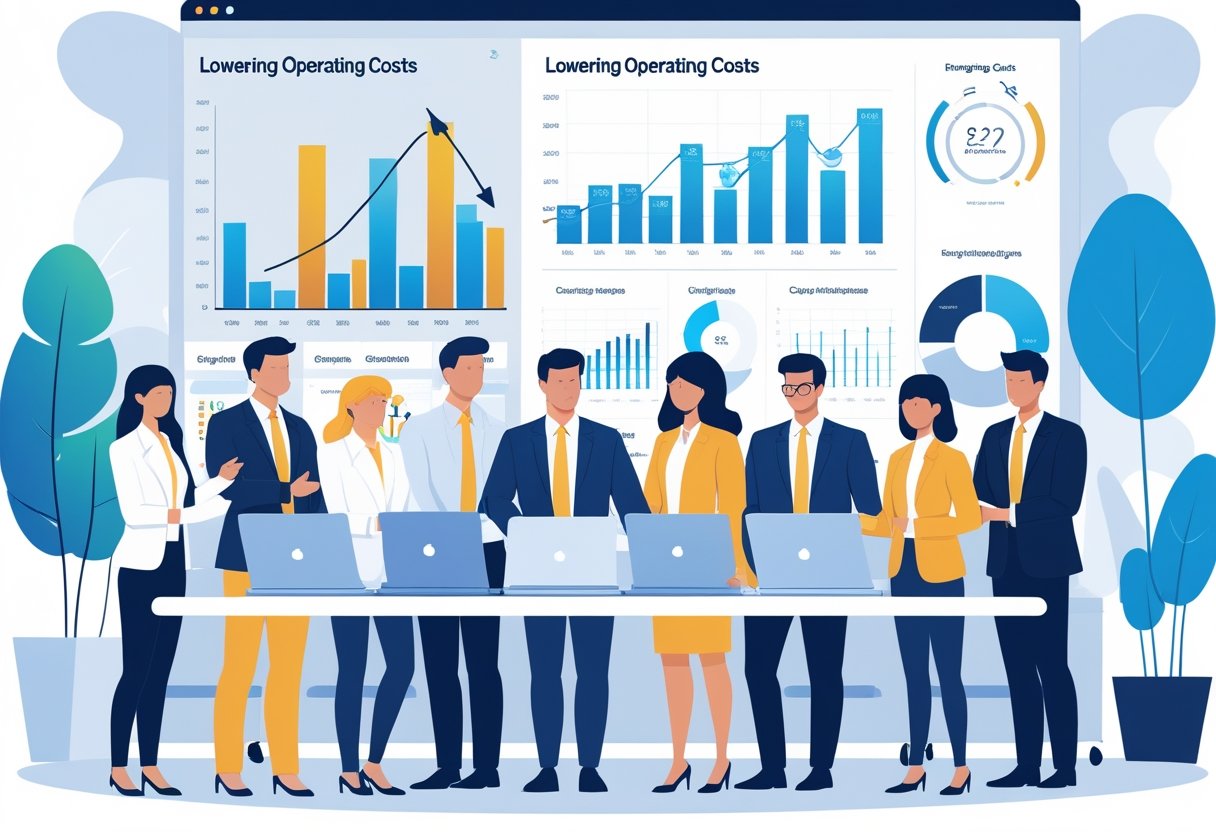
Running a business means watching every dollar while still delivering solid work. Rising prices, tight budgets, and daily expenses can make that hard. You need clear ways to cut costs without slowing growth or hurting quality.
You can lower operating costs by improving efficiency, using the right tools and making smarter spending choices across your business. This guide shows how to spot waste, control expenses, and keep operations lean and stable.
You will learn practical steps that fit real business conditions. Each section focuses on actions you can apply now and adjust as your business grows.
Key Takeaways
-
You can reduce costs by tracking spending and fixing weak processes.
-
Smart tools and automation help you save time and money.
-
Strong cost control supports long-term business stability.
Understanding Operating Costs

Operating costs shape your daily cash flow and affect how much profit you keep. You need clear definitions, practical categories, and a sharp view of where costs rise or fall inside your business.
What Are Operating Costs?
Operating costs are the ongoing expenses you pay to run your business each day. They do not include one-time purchases like new buildings or major equipment. Instead, they cover the basics that keep operations moving.
These costs often include rent, utilities, payroll, software, insurance, and supplies. If you stop paying them, your business slows or stops. Clear tracking helps you see where money goes and where waste hides.
Types of Operating Expenses
You can group operating expenses into a few clear categories. Each category behaves differently when sales rise or fall.
|
Expense Type |
Description |
Examples |
|---|---|---|
|
Fixed costs |
Stay stable month to month |
Rent, insurance |
|
Variable costs |
Change with activity level |
Raw materials, shipping |
|
Semi-variable costs |
Mix of fixed and variable |
Utilities, overtime pay |
Fixed costs offer predictability but limit flexibility. Variable costs give you more control during slow periods. Reviewing common operating expense categories helps you decide which costs to reduce first without harming service or quality.
Key Areas Impacting Costs
Labor often takes the largest share of operating costs. Wages, benefits, training, and overtime add up fast, especially if roles overlap or processes stay manual.
Technology also drives costs. Software subscriptions, cloud services, and IT support can grow quietly over time. Regular reviews prevent unused tools from draining your budget.
Strategic Cost Reduction Frameworks
You lower operating costs best when you use clear rules, firm targets, and repeatable methods. Strong frameworks help you see where money goes, decide what must change, and control spending over time.
Assessing Current Expenses
You start by mapping every major cost across your business. Group expenses by labor, vendors, tools, space, and financing. This view helps you spot waste and overlap fast. Focus on costs that grow as sales grow. These often hide the biggest leaks.
Use a simple table to guide reviews:
|
Cost Type |
Owner |
Monthly Cost |
Business Value |
|---|---|---|---|
|
Software |
IT |
$12,000 |
Medium |
|
Overtime |
Ops |
$18,000 |
Low |
Ask direct questions. Does this cost support revenue, safety, or legal needs? If not, flag it for change.
Setting Measurable Reduction Goals
You turn findings into targets you can track. Each goal should include a number, a deadline, and an owner. Vague goals fail because no one knows when they win.
Avoid cutting costs in isolation. Some leaders redesign how costs scale with growth, a concept often called cost curve reshaping.
Strong goals follow a simple rule:
-
Specific: Cut cloud spend by 15%
-
Timed: Within six months
-
Tracked: Monthly reports
Tie goals to profit, not just savings. A cut that hurts delivery or sales often costs more later.
Zero-Based Budgeting Approaches
You use zero-based budgeting by rebuilding budgets from scratch. Each expense must earn approval every cycle. Past spending does not justify future spending.
This method forces hard choices. Teams explain why they need tools, headcount, or vendors. Leaders compare options side by side, not against last year’s budget. Firms often pair this approach with broader strategic cost management frameworks to keep decisions consistent.
Zero-based budgeting works best when you:
-
Review budgets quarterly
-
Limit exceptions
-
Link spend to output
You gain control, reduce drift, and keep costs aligned with real business needs.
Leveraging Technology to Lower Costs
You can lower operating costs by using tools that cut manual work, reduce IT spending, and improve how you make decisions. The most effective options focus on automation, cloud systems, and better use of business data.
Process Automation
Process automation reduces costs by removing repetitive manual tasks from daily work. You can automate activities like data entry, invoicing, time tracking, and basic customer support. This cuts labor hours, lowers error rates, and speeds up turnaround times.
Many businesses use task and workflow tools to assign work, track progress, and trigger actions without manual input. According to a guide on technology that reduces business costs, automation also helps teams focus on higher‑value work instead of routine tasks.
Key areas where automation delivers the most savings include:
-
Accounting and expense approvals
-
Inventory updates and order processing
-
Employee onboarding steps
You gain clearer workflows and predictable costs with fewer delays.
Implementing Cloud Solutions
Cloud solutions lower costs by replacing on‑site servers and reducing IT maintenance. You avoid large upfront hardware purchases and pay only for what you use. Cloud tools also scale easily as your business grows or contracts.
Common cloud systems include file storage, accounting software, collaboration tools, and CRM platforms. A review of cloud computing and automation benefits for small businesses shows that cloud tools help businesses stay lean while maintaining performance.
Cloud platforms also improve access and security. Your team can work from any location while keeping data backed up and protected. Fewer system outages and updates managed by vendors help you control support costs and downtime.
Using Data-Driven Decision Making
Data-driven decisions help you cut waste by showing where money, time, and resources actually go. You can track costs by project, department, or product to spot inefficiencies early.Business analytics tools combine data from sales, operations, and finance into simple dashboards.
You should focus on metrics such as:
-
Cost per unit or service
-
Labor hours per task
-
Inventory turnover rates
Clear data lets you adjust pricing, staffing, and purchasing decisions with confidence.
Optimizing Financial Management
Strong financial management lowers costs without hurting daily operations. You can reduce cash pressure by fixing debt terms, tightening vendor spend, and using tax rules the right way.
Restructuring Debt and Financial Obligations
You should review all loans, credit lines, and lease agreements at least once a year. Focus on interest rates, repayment terms, and penalties. Even small rate changes can reduce monthly cash outflow.
Refinancing high-interest debt often delivers fast savings. Extending loan terms can also improve cash flow, even if total interest rises. This tradeoff makes sense when cash stability matters more than long-term cost.
You should also consolidate debt where possible. Fewer payments reduce admin time and lower the risk of missed deadlines. Firms that align debt changes with broader cost optimization strategies often see better results.
Vendor and Supplier Negotiation Strategies
You gain leverage when you understand your spending patterns. Start by listing vendors by annual spend, contract length, and renewal dates. This view shows where negotiation matters most.
Ask for price breaks tied to volume, longer terms, or early payments. Many suppliers prefer stable revenue over higher margins. You can also request fee removal for services you no longer use.
You should benchmark prices using market data or competing bids. Even a single quote can reset pricing. Regular reviews help uncover hidden charges.
Tax Optimization Tactics
You should treat tax planning as an ongoing process, not a yearly task. Start by reviewing deductions tied to equipment, software, and depreciation. Missed deductions directly increase operating costs.
Credits for research, training, or energy use often apply to small and mid-sized firms. You may qualify even if you never claimed them before. Timing income and expenses across tax years can also smooth cash flow.
You should align tax planning with accurate financial data. Firms that track costs closely can model tax impact earlier. Structured approaches outlined in a cost optimization playbook focused on financial data support better tax decisions without added risk.
Operational Efficiency Improvements
You can reduce operating costs by tightening how work flows, how teams share support functions, and how you use physical space. Small process changes often cut waste, while structural changes create long-term savings without hurting service or output.
Streamlining Business Processes
You lower costs fastest when you remove steps that do not add value. Start by mapping key workflows, such as order handling or billing, and note delays, rework, and manual tasks. Replace repeated manual work with automation where accuracy and speed matter most.
Focus on data, not guesses, when deciding what to fix. Real-time reporting tools help you spot bottlenecks and track cycle time. Many leaders use analytics and automation to cut waste and improve output, as outlined in this guide to managing operating costs through technology and data.
High-impact actions include:
-
Standardizing tasks across teams
-
Removing duplicate approvals
-
Using one system instead of several disconnected tools
Consolidating Shared Services
You reduce overhead when support functions follow the same rules and systems. Shared services work best for finance, HR, IT, and procurement. Instead of each team running its own version, you centralize the work under one structure.
This approach cuts staffing overlap and improves consistency. It also makes costs easier to track and control. Many companies pair consolidation with managed service providers to lower hiring and training costs while keeping service levels stable, a strategy explained in this overview of improving operational efficiency.
Common consolidation targets:
-
Payroll and benefits administration
-
Vendor management and purchasing
-
Help desk and internal support
Optimizing Real Estate and Infrastructure
You often spend more on space and infrastructure than you need. Start by reviewing how often teams use offices, warehouses, or retail locations. Underused space raises rent, utilities, and maintenance costs without adding value.
Flexible layouts and hybrid work models can reduce your footprint. You can also renegotiate leases, sublease unused space, or relocate to lower-cost areas. Infrastructure reviews should include energy use, equipment age, and maintenance contracts.
Key focus areas:
-
Space utilization rates
-
Energy-efficient equipment
-
Long-term lease terms and exit options
Human Resources and Outsourcing Strategies
You can lower operating costs by changing how you hire, who does the work, and how you manage benefits. Smart staffing choices, targeted outsourcing, and tighter benefit controls reduce waste while keeping your workforce stable and productive.
Flexible Staffing Models
You reduce fixed labor costs when you match staffing levels to real demand. Flexible models include part-time roles, contract workers, and project-based hiring. These options limit payroll during slow periods and avoid long-term commitments.
Seasonal hiring works well for retail, logistics, and customer support. Contract roles help you cover short-term skill gaps without adding headcount. Many companies also use freelancers for design, IT, or marketing work.
A blended workforce often costs less than full-time-only teams.
|
Staffing Type |
Best Use Case |
Cost Impact |
|---|---|---|
|
Part-time |
Predictable peak hours |
Lower wages and benefits |
|
Contract |
Short-term expertise |
No long-term payroll |
|
Freelance |
Specialized tasks |
Pay per project |
Clear role definitions and strong scheduling prevent gaps and overstaffing.
Outsourcing Non-Core Functions
Outsourcing shifts routine work to specialists who operate at lower cost. You keep internal teams focused on revenue and strategy. Common targets include payroll, recruiting, compliance, and IT support.
Many businesses cut HR expenses by using external providers for hiring and administration. This approach lowers training costs and reduces errors.
You gain scale benefits when vendors spread costs across many clients. Service agreements also make expenses predictable.
Outsourcing works best when you:
-
Keep clear performance metrics
-
Set data security standards
-
Assign one internal owner per vendor
Strong oversight prevents service gaps and misalignment.
Optimizing Employee Benefits
Benefits often rank as one of your largest operating expenses. You control costs by reviewing plans each year and removing underused options. Small changes can create steady savings.
Group health plans, tiered coverage, and voluntary benefits reduce employer spend. Many companies also shift to defined contribution models. Outsourced benefits administration can lower errors and administrative labor.
Clear communication matters. When employees understand trade-offs, they make cost-aware choices.
Focus on benefits that deliver value:
-
Health coverage with managed networks
-
Retirement plans with capped matching
-
Wellness programs tied to usage data
You protect margins while supporting employee needs.
Sustainability and Cost Control
You can lower operating costs by cutting waste, using energy smarter, and tracking spending often. These actions reduce monthly expenses and help you control costs over time.
### Implementing Eco-Friendly Practices
You can reduce costs by focusing on energy, materials, and daily operations. Start with steps that show quick savings and low risk.
Many companies cut utility bills by upgrading lighting, heating, and cooling systems. Energy audits help you find where money leaks out. Studies show that practical sustainability steps can lower costs while improving efficiency, as seen in these sustainability strategies that help reduce costs.
High-impact actions to prioritize:
|
Action |
Cost Impact |
Time to See Savings |
|---|---|---|
|
LED lighting upgrades |
Lower energy bills |
3–6 months |
|
Smart thermostats |
Reduced heating and cooling costs |
1–3 months |
|
Waste reduction programs |
Lower disposal fees |
Immediate |
You can also save by choosing durable equipment and reducing paper use. Many businesses find that sustainability supports long-term savings, not just environmental goals, as explained in how sustainability initiatives drive cost savings.
### Ongoing Expense Monitoring and Audits
You control costs better when you review them often. Regular checks help you spot problems early and prevent small issues from growing.
Track expenses monthly and compare them to clear targets. Focus on utilities, vendor contracts, travel, and subscriptions. Tools that automate tracking make it easier to see trends and flag unusual spending.
Schedule internal audits at least once a year. These reviews confirm that teams follow spending rules and that systems work as planned. Many cost control frameworks stress the value of routine reviews to support sustainable savings, as described in effective strategies to reduce operations costs.
Key areas to review during audits:
-
Vendor pricing and contract terms
-
Energy and water usage reports
-
Software licenses and recurring fees
Consistent monitoring helps you make small adjustments before costs rise.
Frequently Asked Questions
Lowering operating costs often involves vendor management, smarter workflows, and better use of staff time. You can reduce expenses without cutting quality by focusing on efficiency, pricing, and daily processes.
What are effective strategies for reducing operational costs in businesses?
You can reduce costs by tracking expenses closely and comparing them to revenue. This helps you spot areas where spending grows faster than income.
Many businesses lower costs by switching to remote work, limiting travel, and reviewing vendor contracts. These steps reduce fixed expenses like rent and utilitie.
Which cost reduction measures can small businesses implement without compromising quality?
You can start by negotiating better prices with vendors and paying invoices early to earn discounts. Small savings on each bill can add up over a year.
You can also cut waste by using digital tools instead of paper and by controlling energy use. These steps lower costs while keeping service levels steady.
How can automation lead to lower operating expenses for a company?
Automation reduces the time you spend on manual tasks like invoicing, payroll, and data entry. This lets your team focus on higher-value work.
Using software tools can also reduce errors that cause rework or delays. Many cost control strategies include automation as a core tacti.
In what ways can renegotiating with suppliers contribute to business cost reduction?
When you request new bids from suppliers, you create price competition. This often leads to lower rates for the same service.
You can also renegotiate terms like payment timing or bulk discounts. These changes improve cash flow and reduce ongoing expenses.
What role does employee training play in minimizing operational costs?
Training helps your staff complete tasks faster and with fewer mistakes. This lowers rework, waste, and support costs.
Well-trained employees also rely less on outside help or overtime. Over time, this improves productivity without increasing payroll.
What are the key areas to focus on when attempting to cut costs without negatively affecting business operations?
You should focus on fixed expenses, vendor pricing, and process efficiency. These areas often offer savings without affecting customers.
You should also review travel, office space, and energy use. Many businesses find savings here by using virtual meetings and flexible work models..